Showing posts with label cars. Show all posts
Sunday, October 7, 2012
So you want to own an old car with style? How to start your search
If you love old cars but don't know a lot about them, you might assume that you can't own one without spending big, big bucks. Not so fast - there are a lot of cars out there that you CAN afford to buy, and some that you can even afford to maintain!
The market for old cars varies a lot. Too keep things simple, I'll define old cars as ones with carburetors, not fuel injection. So think further back than 1984. If you want seat belts (optional in some cases) and air conditioning, the farther back you go, the tougher your search. Seat belts didn't become standard in cars until the mid 1960s. Air conditioning was pretty rare in cars up through the 1970s. So your first step should really be to list some "must-have" features you want in your old car.
Ask yourself how you will use the car -- do you want to tow a trailer with it? If so, you need to know what that car's towing capabilities are. Do you want to drive it in parades - be sure it's not prone to overheating. Do you want a pristine show car that you will baby and worry over, or a "driver quality" car you can park at the grocery store without worrying too much? Do you want a completely original car, one that has been "restored", or one that has some customization or safety modifications? How many people do you want to be able to have ride with you - if you have a family, will the car or truck have enough room for everyone?
Generally speaking, price equates to popularity and condition (and time of year). A late 1950s to mid 1960s convertible will usually be priced higher than a nice two-door coupe; and a station wagon will usually get a higher price than a 4-door family sedan. A car with a V8 engine will usually be priced higher than a car with a six cylinder or smaller engine. But a lot of price variability has to do with condition. Thanks to televised auctions, a lot of people with old buckets of rust that haven't run in 30 years think their car is worth $50,000. Yea, right. Having owned about 10 old cars over the years, I can tell you that it's cheaper in the long run to buy a decent, running car than a car needing a lot of mechanical or body work. If you are patient and not impulsive, you'll probably get a better deal on a convertible in the fall or winter than you will in the spring or summer.
If you are seriously considering getting an old car for occasional pleasure driving, your goal should be to become a budding expert on the car of your dreams before you do any serious car shopping.
Get online and search for different makes and models of cars. Google is your friend here. Do image searches on Flickr or other photo sharing sites. Look at a lot of pictures. Look at eBay and craigslist ads for a 50-mile radius around your area over a period of time to get a feel for what's available, what is selling, and what isn't selling.
Depending on where you live, the availability, condition, and value of old cars will vary, sometimes by a lot. Make a short list of cars that appeal to you. Try to narrow your interest to a particular make (Ford? Chevy? Buick? Chrysler? Rambler?) and model (Mustang? Impala? Corvette? Thunderbird?).
Do some more searching and see if there is a car club near you specializing in the kind of car you are interested in. Contact someone in the club, and start networking to find people who wouldn't mind helping you find some cars to look at. Go to some club events and meet others who own cars similar to what you think you want. You really want to find someone knowledgeable about the common problems found in the make/model/year of car that interests you. You want to learn if a car is easy or hard to find parts for. What will it cost to insure the car?
Find a local repair shop with someone old enough or experienced enough working on carburated cars and non-electronic ignitions. Think simple. The challenge is, a lot of technically trained mechanics have never worked on an older car. Ask around. Go to a car show and talk up an owner of a car you like. Usually you can find at least one person who can point you to a trustworthy mechanic who knows and works on old cars.
Once you've narrowed your interests to a particular kind of car, one of your first goals should be to find someone near you who would go with you to look at cars for sale. Or at least get a referral to a nearby mechanic or old car expert who can evaluate an old car for you. Spending $100 - $200 on a comprehensive inspection before you buy is a smart investment that could save you from buying a car with hidden, high-dollar problems.
Be realistic about your abilities and buy the best condition car you can find for the money. Driveways and garages and backyards are littered with projects that turned out to be overwhelming after the "project" was dragged home.
Saturday, January 8, 2011
Old cars in my blood Part 3 - 1964 Mercury Park Lane convertible
I've done some earlier posts here and here about my past and current old cars, all projects in different stages of incompletion.
Earlier posts covered my 1967 Mercury Cougar XR7, aka "Barncat,"
and my 1963 Mercury Comet station wagon. I'll be developing pages for each of these cars as I get time. Now for the big kahuna, my 1964 Mercury Park Lane convertible.
I've had this 1964 Mercury Park Lane convertible a few years now. It's a really solid, almost-totally-rust-free car. The Park Lane shares a lot of body parts, interior design, and mechanical parts with the 1964 Ford Galaxie convertible, and the interior also looks a bit like the interior of an early 1960s Thunderbird.
Read the rest here on the Park Lane page, where I'll keep any updates to the restoration.
Earlier posts covered my 1967 Mercury Cougar XR7, aka "Barncat,"
and my 1963 Mercury Comet station wagon. I'll be developing pages for each of these cars as I get time. Now for the big kahuna, my 1964 Mercury Park Lane convertible.
I've had this 1964 Mercury Park Lane convertible a few years now. It's a really solid, almost-totally-rust-free car. The Park Lane shares a lot of body parts, interior design, and mechanical parts with the 1964 Ford Galaxie convertible, and the interior also looks a bit like the interior of an early 1960s Thunderbird.
Read the rest here on the Park Lane page, where I'll keep any updates to the restoration.
Saturday, October 9, 2010
Hershey Pa. antique car road trip
Apologies for the long drought between posts again. Work has had me on the road a lot this year. So what do I do when I get a day off work? Hit the road!
A friend and I spent the day Friday at the annual Antique Automobile Club of America annual fall meet and flea market at Hershey Park. The weather was beautiful, and there were acres and acres of parts, automobilia, old bicycles, scooters, motorcycles, minibikes, and plenty of miscellaneous too.
You can find a lot of stuff that's not car parts, and if you like to people watch or want to get ideas for dialog for your next feature film or novel, go there!
Here are a few shots I took.
Mercury made this unusual "glass-topped" Sun Valley model in 1954 and 1955.
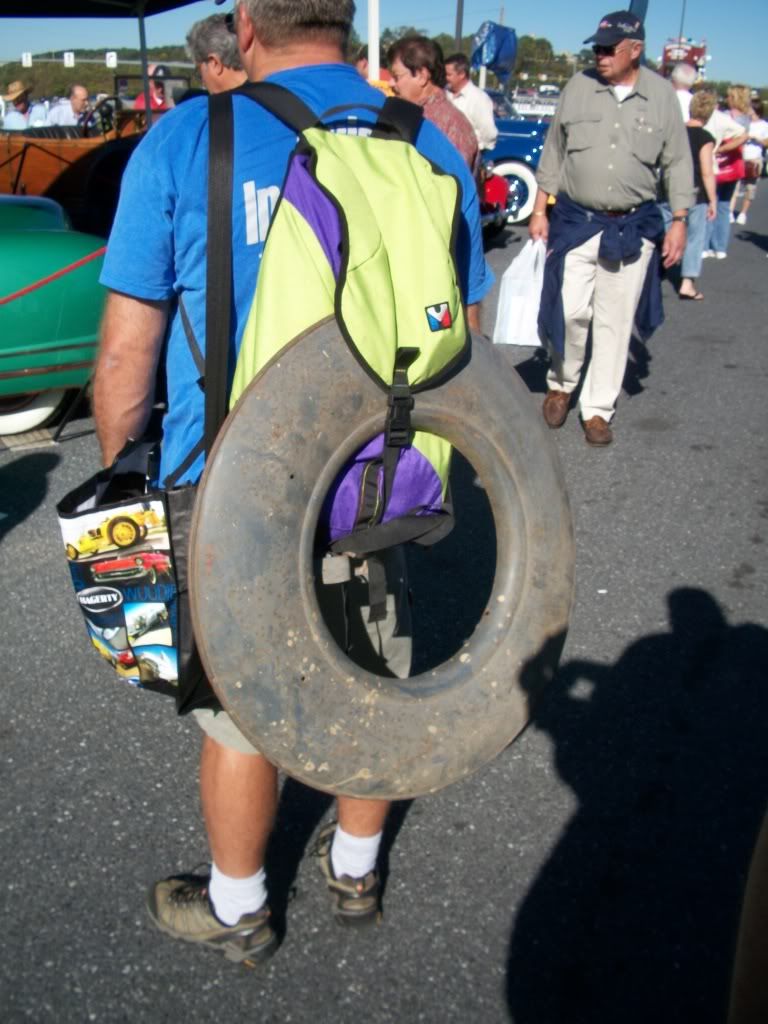
You see people carrying the wildest things.
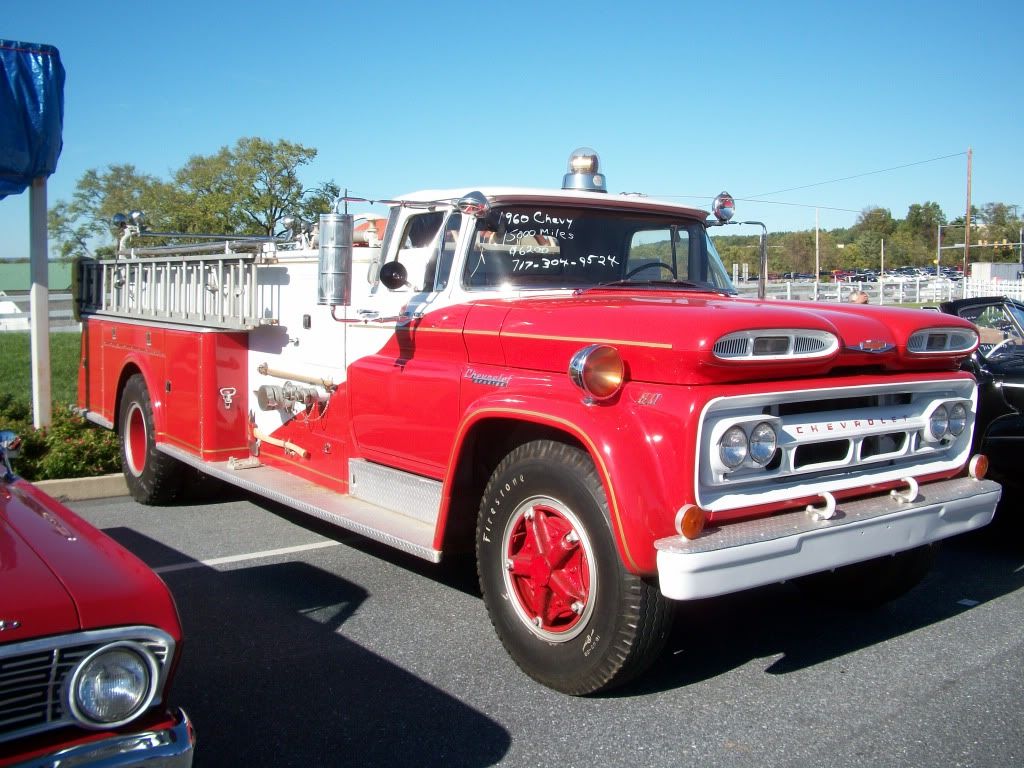
All kinds of wheeled vehicles show up for sale, including this fire truck.
My big expenditure was a trickle battery charger to use on two of my old cars to keep the batteries from dying from lack of use. There's some twisted logic in spending $100 to keep car batteries from going south before their time, but I get tired of having batteries die on me. With this thing, I can maintain a very low charge to the batteries between starts.
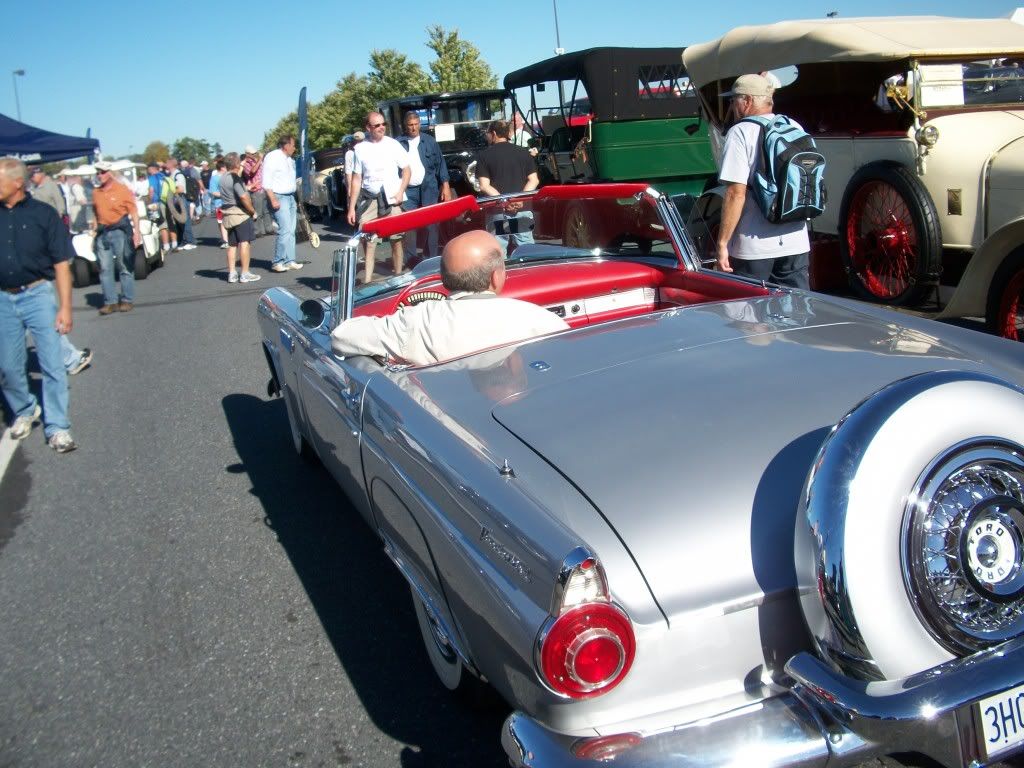
We looked at cars for sale in the "car corral" and there were some real beauties. My favorites are the 1957 Ford Thunderbirds - the last of the two-seater variety, and only that year had tail fins. (I just realized I didn't shoot any 57s, but here's a nice 56 in the corral).
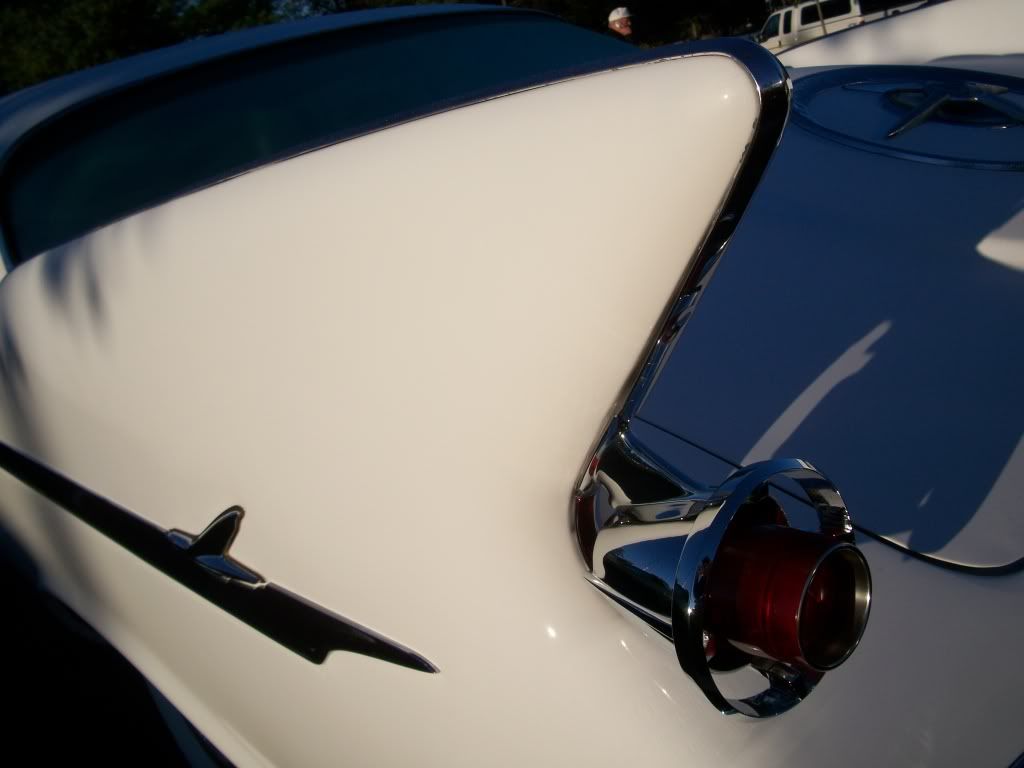
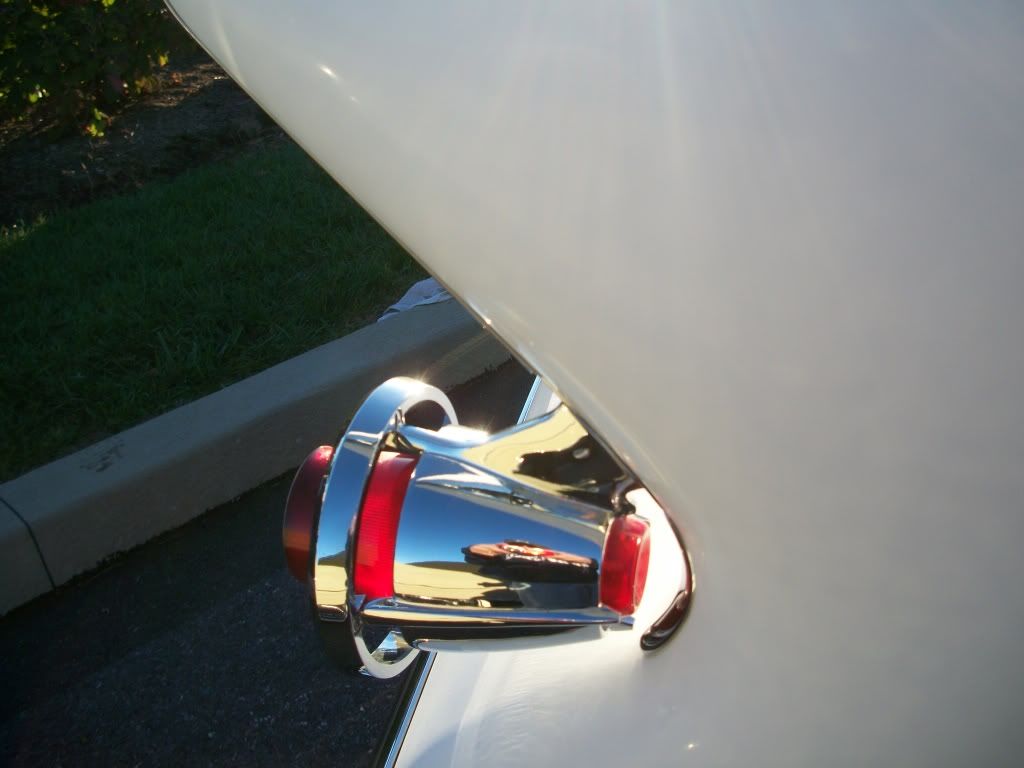
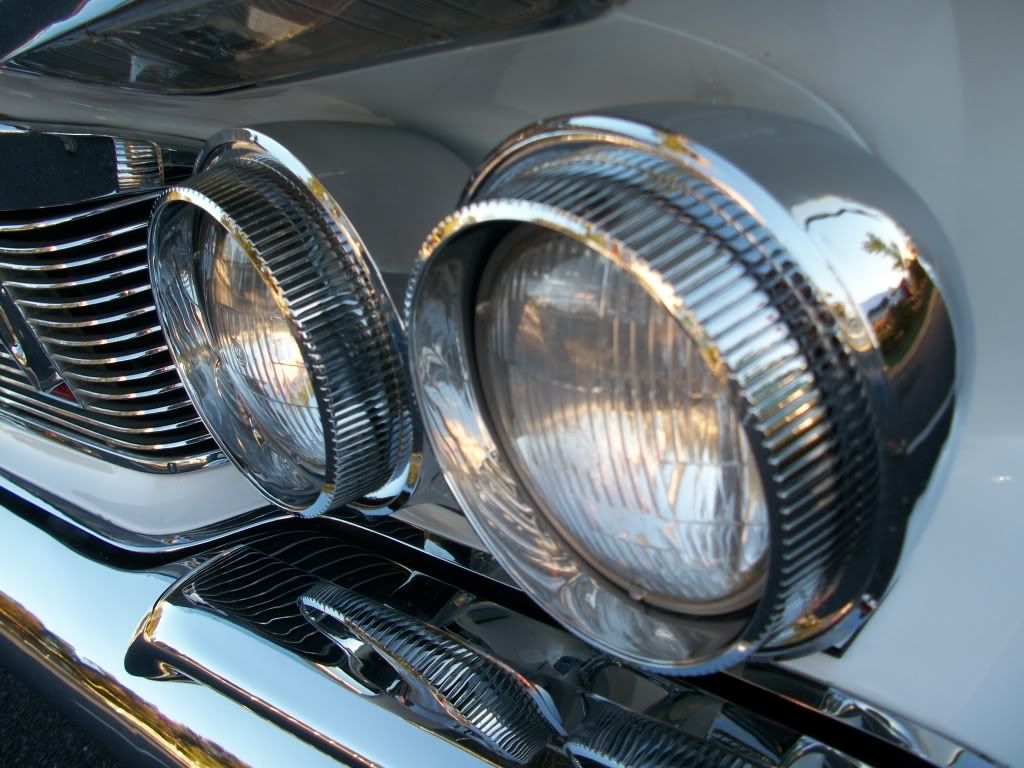
I have a couple shots of the headlights and taillights on an early 60s Chrysler Imperial, which was immaculate. I love the beautiful details on these old cars, and the Imperial was among the most outstanding for detail inside and out.
My best find of the day? Tough call.
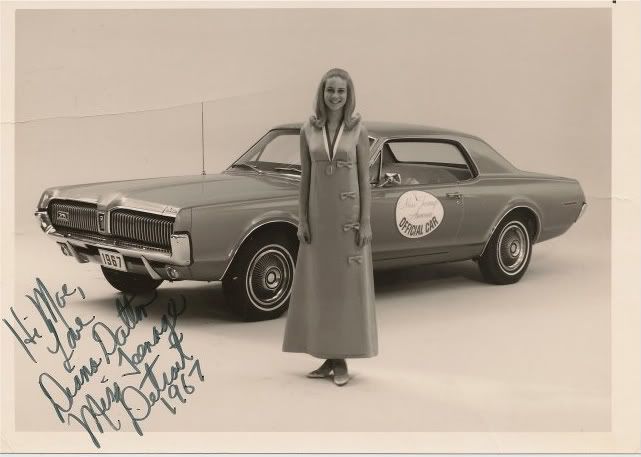
This autographed Miss Teen Detroit photo is cool (check that dress!)
From what I know, the winner of Miss Teen America in 1967 was given a new Mercury Cougar.
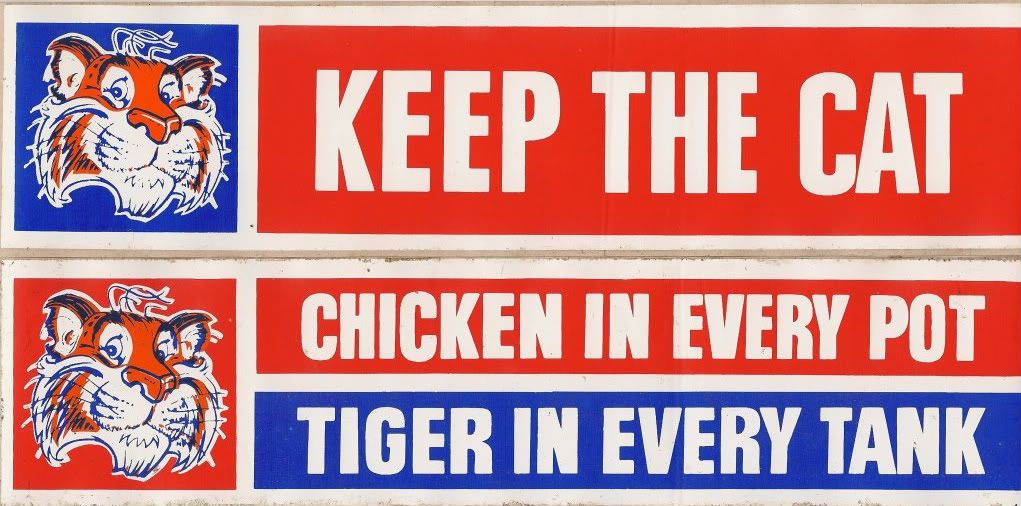
These Esso Tiger bumper stickers must date from either 1968 or 1972 as they look like they were distributed around the time of a presidential election. I love old decals, and I'll probably use one of these on my 1967 Cougar.
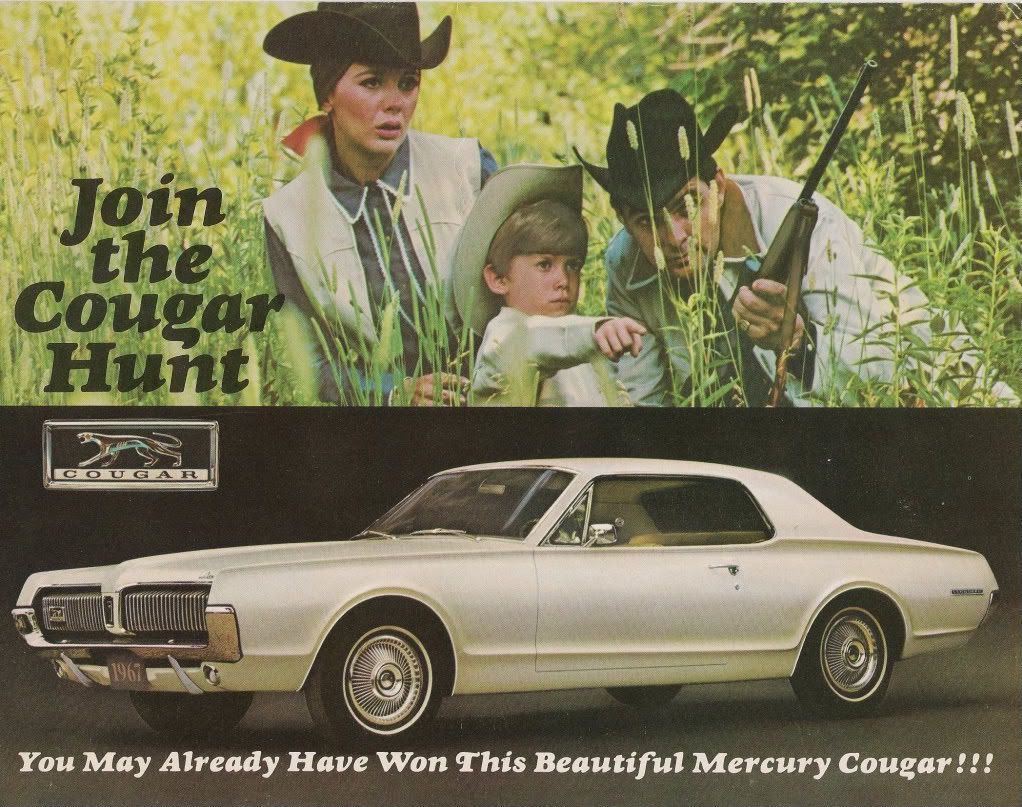
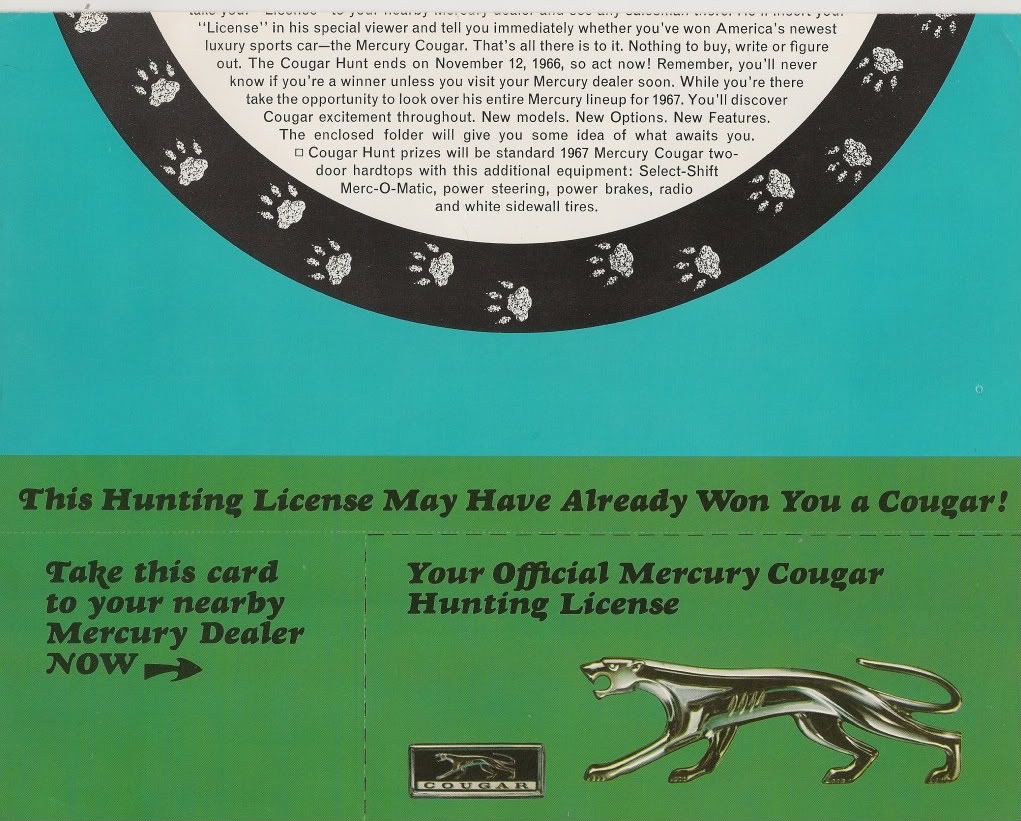
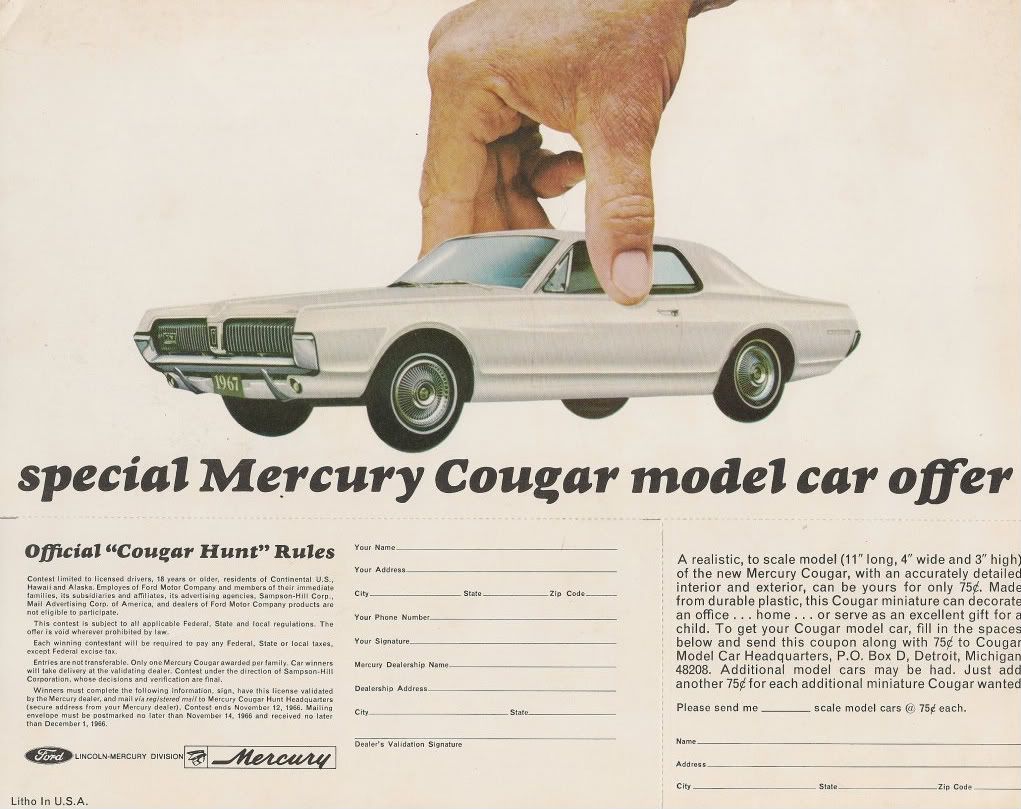
Another Cougar item was this unused contest flier - pretty cool unusual item.
Somewhere around here I have one of the plastic give-away cars shown here.
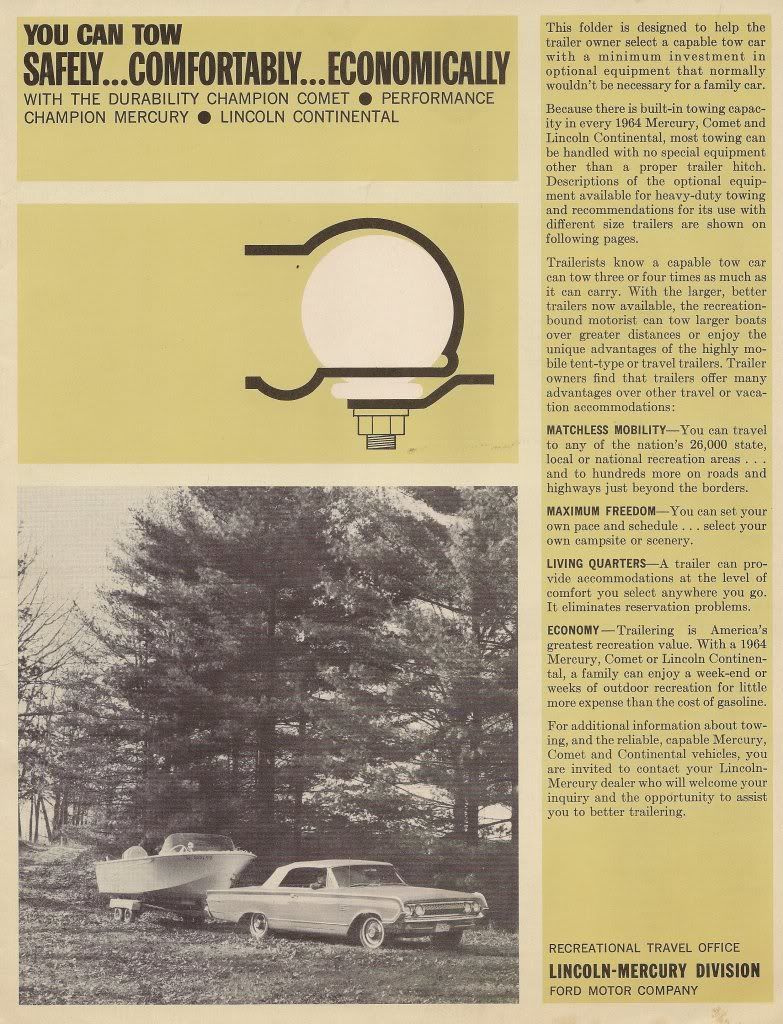
My other great find was this 1964 Mercury towing specifications brochure - it will be helpful when I finally have my 64 Park Lane convertible back on the road, because I want to use that car to tow the Shasta camper.
A friend and I spent the day Friday at the annual Antique Automobile Club of America annual fall meet and flea market at Hershey Park. The weather was beautiful, and there were acres and acres of parts, automobilia, old bicycles, scooters, motorcycles, minibikes, and plenty of miscellaneous too.
You can find a lot of stuff that's not car parts, and if you like to people watch or want to get ideas for dialog for your next feature film or novel, go there!
Here are a few shots I took.
You see people carrying the wildest things.
All kinds of wheeled vehicles show up for sale, including this fire truck.
My big expenditure was a trickle battery charger to use on two of my old cars to keep the batteries from dying from lack of use. There's some twisted logic in spending $100 to keep car batteries from going south before their time, but I get tired of having batteries die on me. With this thing, I can maintain a very low charge to the batteries between starts.
We looked at cars for sale in the "car corral" and there were some real beauties. My favorites are the 1957 Ford Thunderbirds - the last of the two-seater variety, and only that year had tail fins. (I just realized I didn't shoot any 57s, but here's a nice 56 in the corral).
I have a couple shots of the headlights and taillights on an early 60s Chrysler Imperial, which was immaculate. I love the beautiful details on these old cars, and the Imperial was among the most outstanding for detail inside and out.
Notice how these Imperial headlamps are not molded into the front tend but appear to float? Very cool and unusual. Sorry I didn't get more photos, but the owner wasn't there and it was too early in the morning to get decent images.
My best find of the day? Tough call.
This autographed Miss Teen Detroit photo is cool (check that dress!)
From what I know, the winner of Miss Teen America in 1967 was given a new Mercury Cougar.
These Esso Tiger bumper stickers must date from either 1968 or 1972 as they look like they were distributed around the time of a presidential election. I love old decals, and I'll probably use one of these on my 1967 Cougar.
Another Cougar item was this unused contest flier - pretty cool unusual item.
Somewhere around here I have one of the plastic give-away cars shown here.
My other great find was this 1964 Mercury towing specifications brochure - it will be helpful when I finally have my 64 Park Lane convertible back on the road, because I want to use that car to tow the Shasta camper.
Here's a selection of photos from the day:
I didn't find it among this collection of auto emblem...
but I did find the Mercury script I was missing for the hood of my 63 Comet wagon with another vendor.
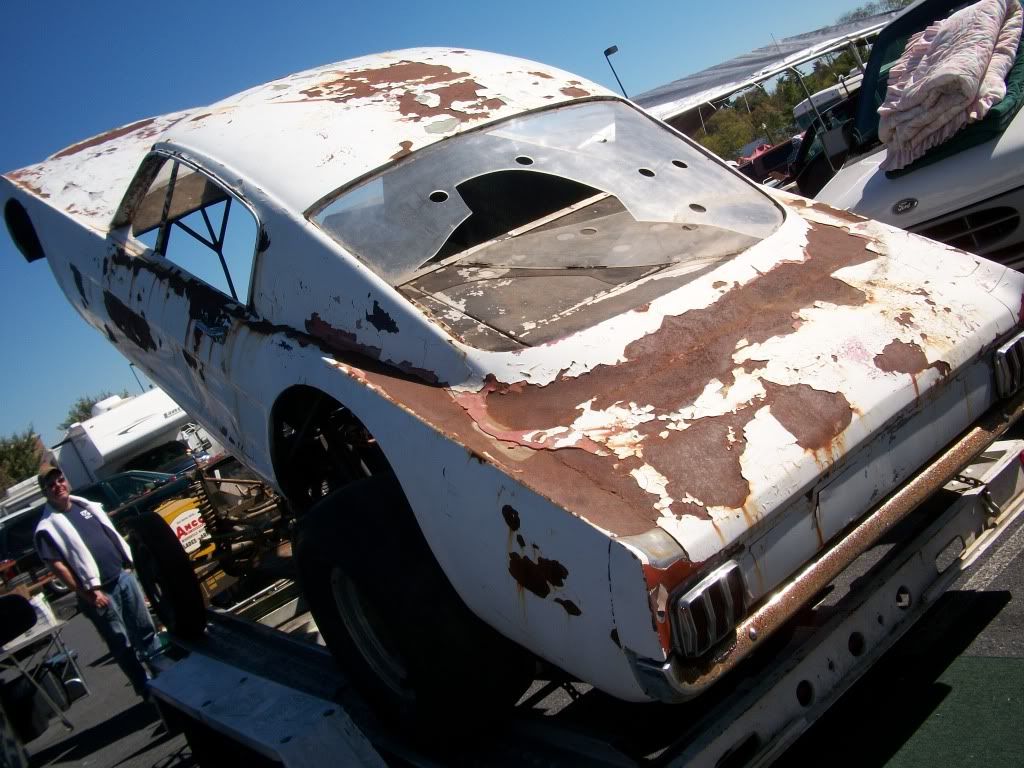
Somebody had welded this Mustang fastback's doors and front end into a single piece and made a funny car out of it. Very unusual, because funny cars used a lightweight fiberglass version of the body.
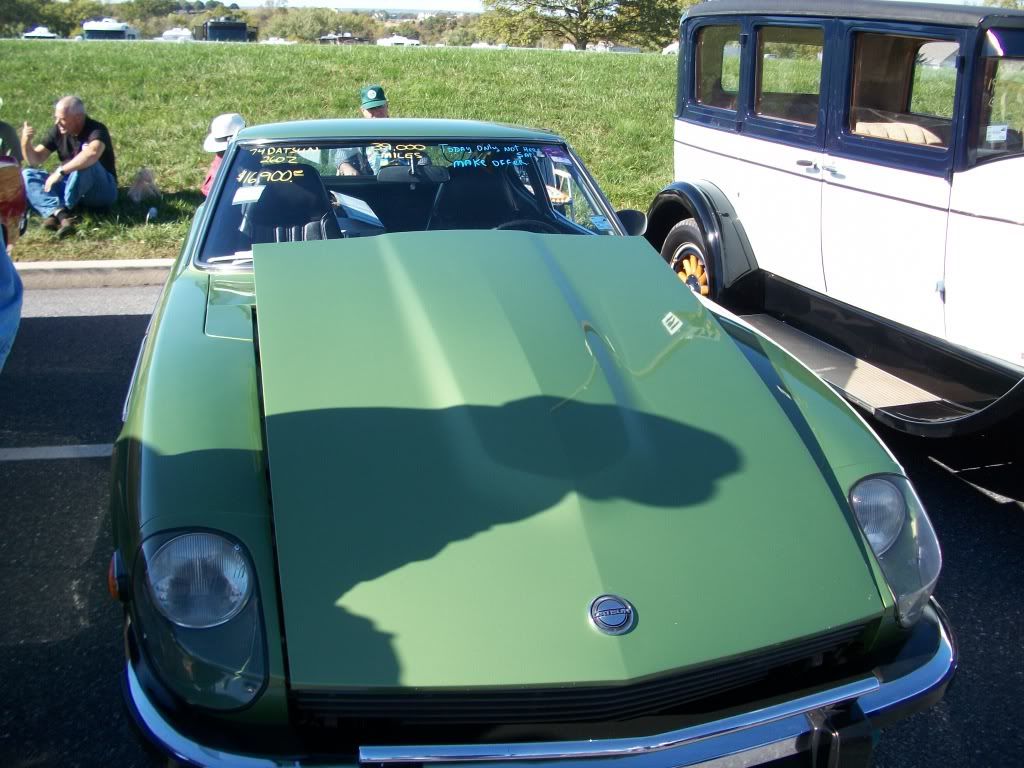
A Datsun 260-Z
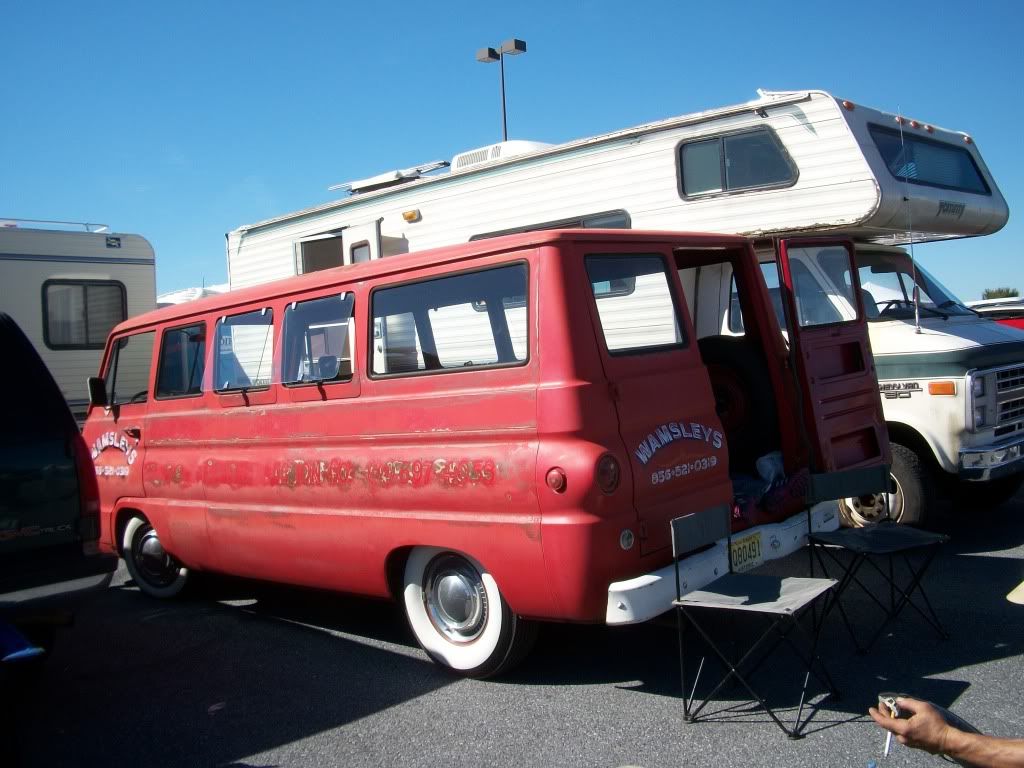
A very cool van owned by one of the vendors
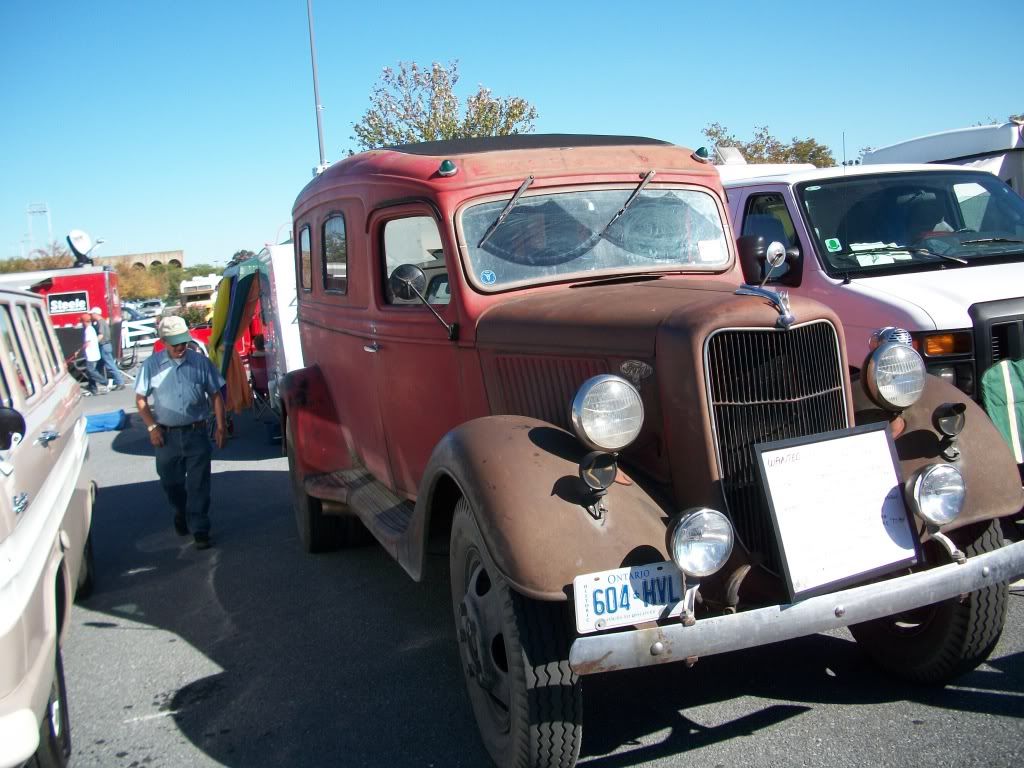
This old van was huge, driven from Quebec!
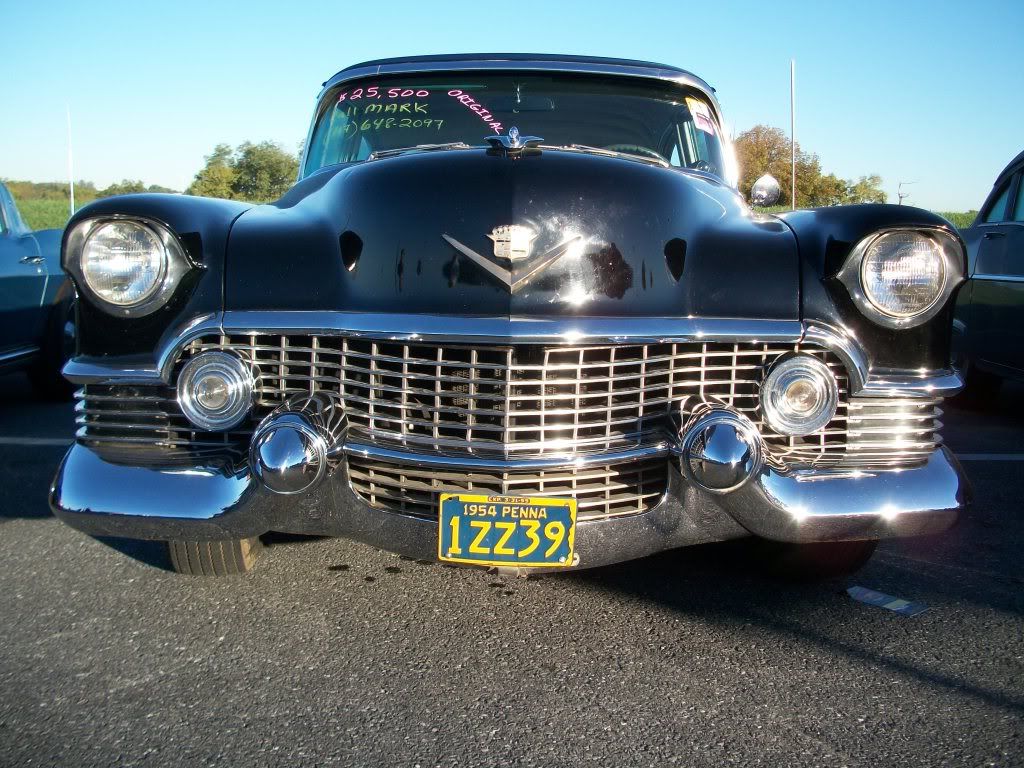
I love the old Caddy's with chrome Dagmar bumpers
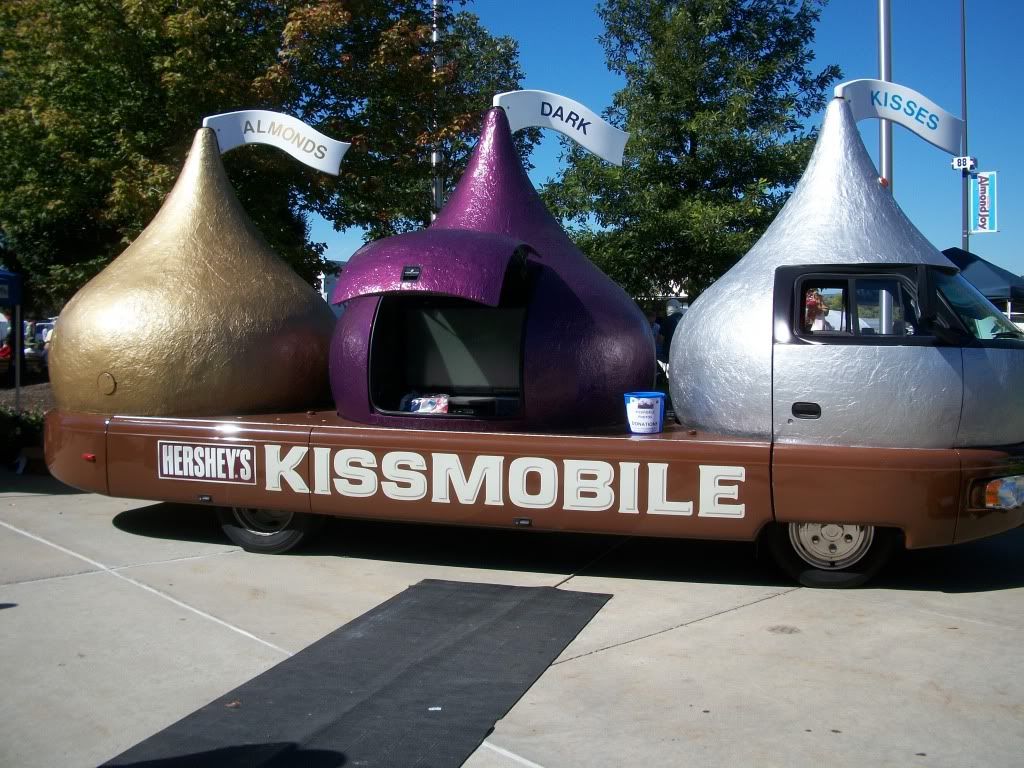
And since it was Hershey, there was the Kissmobile
If you made it this far, the Uncle(?) sends a kiss your way...
Monday, August 2, 2010
If you lack patience and perseverance, don't ever buy an old old car
Take it from me, owning three old cars that are all projects can suck all the optimism out of even a saint, and I'm no saint.
I've been struggling to get this '63 Mercury Comet wagon on the road for 18 months now, it was supposed to be a six month project. The Comet, like the Falcon, is only slightly more complicated than a Model T Ford, and definitely easier to drive. But even though the parts supply for these cars is pretty darn good because so many were sold back in the day and lots of new remanufactured parts are available, you still have to either pay someone to fix and maintain things, or do it yourself. Guess which of these is me. :-D
Multiply these woes times three cars, and factor in that when you don't use a car and it sits, rubber seals start to break down in transmissions, brakes, and engines, batteries begin to lose their charge, mice start to chew on the wiring, and little gremlins move in and take over.
Anyway, I had a breakthrough on the Comet over the weekend. The engine ran pretty good, but the carhas had a broken cast iron exhaust manifold, which spewed poisonous carbon monoxide under the hood. Driving it more than 200 feet gives you a headache. Had to fix it. But the bolts that hold the exhaust manifold to the engine's cylinder head tend to rust really badly. So when you go to loosen the bolts, the bolt heads get rounded, or worse, they snap off. And that's if you can even reach the bolts to be able to snap them off.
I puzzled over this for months. Had a good unbroken exhaust manifold, but I was struggling with how to get at those bolts. I talked to a mechanic we use, and he said he could try it, but if a bolt broke, the engine might have to come out. (I envisioned making his next six boat payments). So I waited some more.
Finally while checking craigslist for Comet/Falcon parts, I stumbled across a rebuilt cylinder head with an unbroken exhaust manifold. Hmm. I did a little reading and decided I could more easily pull the head off the engine and replace the head and the manifold at the same time. So I bought the rebuilt head. Bought a head gasket, and new bolts. Read up on what to do.
Pulled the old head and exhaust manifold, cleaned up the mounting surfaces on the engine, and installed the new gasket and head.
Without getting too detailed, some parts didn't go back in the way they should. Took some more days to think about why this was. Read more online forums looking for clues. Finally sorted out where the problem might be, and decided to take the 80-pound head back off and look deeper into the engine. Found the problem. Put the head back on. Screwed up installing a part and had to pull the 80-pound head off AGAIN. Finally got those parts lined up, and carefully bolted everything back together according to instructions. Then I went to reattach the carburetor. It didn't fit. :-P
Luckily I had some extra parts and a similar carburetor base. I studied both and figured I could unbolt the base off the parts I had and swap bases and it should fit. It did, but when I finally tried to start the engine, it made some horrible clattering noises and I freaked out. Shut it down. Took the valve cover off. No broken parts I could see. So tried starting it again, fearing the worst. Still sounded awful, revved way to high and clattered some more.
So I took a deep breath, shut the hood, and put away the tools. Thought about the problem some more. Read some more. Decided I needed to check the spark plugs, then check the timing (the distributor is held down by a bolt - with a timing light you can start the car, loosen the distributor, and turn it to adjust the timing so it runs more smoothly. It's a little more complicated than that, but that's basically what you do).
Yesterday I checked the spark plugs, they were OK. At least I eliminated that as the problem.
Tonight I adjusted the timing, and that made the car smooth out some. But it was revving too fast and the gas pedal was causing the carburetor throttle to stick open. Not good. Figured out how to make some adjustments to the carburetor. Great!
But I'm seeing a leeeetle bit of gas dripping near the hot engine. Not good. Great way to catch the car on fire. And, the new radiator hoses I put on the car appear to have a leak somewhere. So now I need to deal with these issues before I can try driving the car around the block. Assuming the transmission doesn't crap out. Or my brake repairs don't work.
Oh, and the new ignition switch I put in the dash? It works about every third time you turn the key. :-P
Anyway, I guess my point is, if you love old stuff, it's fairly easy to fix a lamp, or get a chair reupholstered. But before you buy an old car, have a nice pot of money to pay someone to keep it running. Or plan to really test your patience.
(Oh, and don't even ask me about the tailgate issues I've had...)
I've been struggling to get this '63 Mercury Comet wagon on the road for 18 months now, it was supposed to be a six month project. The Comet, like the Falcon, is only slightly more complicated than a Model T Ford, and definitely easier to drive. But even though the parts supply for these cars is pretty darn good because so many were sold back in the day and lots of new remanufactured parts are available, you still have to either pay someone to fix and maintain things, or do it yourself. Guess which of these is me. :-D
Multiply these woes times three cars, and factor in that when you don't use a car and it sits, rubber seals start to break down in transmissions, brakes, and engines, batteries begin to lose their charge, mice start to chew on the wiring, and little gremlins move in and take over.
Anyway, I had a breakthrough on the Comet over the weekend. The engine ran pretty good, but the carhas had a broken cast iron exhaust manifold, which spewed poisonous carbon monoxide under the hood. Driving it more than 200 feet gives you a headache. Had to fix it. But the bolts that hold the exhaust manifold to the engine's cylinder head tend to rust really badly. So when you go to loosen the bolts, the bolt heads get rounded, or worse, they snap off. And that's if you can even reach the bolts to be able to snap them off.
I puzzled over this for months. Had a good unbroken exhaust manifold, but I was struggling with how to get at those bolts. I talked to a mechanic we use, and he said he could try it, but if a bolt broke, the engine might have to come out. (I envisioned making his next six boat payments). So I waited some more.
Finally while checking craigslist for Comet/Falcon parts, I stumbled across a rebuilt cylinder head with an unbroken exhaust manifold. Hmm. I did a little reading and decided I could more easily pull the head off the engine and replace the head and the manifold at the same time. So I bought the rebuilt head. Bought a head gasket, and new bolts. Read up on what to do.
Pulled the old head and exhaust manifold, cleaned up the mounting surfaces on the engine, and installed the new gasket and head.
Without getting too detailed, some parts didn't go back in the way they should. Took some more days to think about why this was. Read more online forums looking for clues. Finally sorted out where the problem might be, and decided to take the 80-pound head back off and look deeper into the engine. Found the problem. Put the head back on. Screwed up installing a part and had to pull the 80-pound head off AGAIN. Finally got those parts lined up, and carefully bolted everything back together according to instructions. Then I went to reattach the carburetor. It didn't fit. :-P
Luckily I had some extra parts and a similar carburetor base. I studied both and figured I could unbolt the base off the parts I had and swap bases and it should fit. It did, but when I finally tried to start the engine, it made some horrible clattering noises and I freaked out. Shut it down. Took the valve cover off. No broken parts I could see. So tried starting it again, fearing the worst. Still sounded awful, revved way to high and clattered some more.
So I took a deep breath, shut the hood, and put away the tools. Thought about the problem some more. Read some more. Decided I needed to check the spark plugs, then check the timing (the distributor is held down by a bolt - with a timing light you can start the car, loosen the distributor, and turn it to adjust the timing so it runs more smoothly. It's a little more complicated than that, but that's basically what you do).
Yesterday I checked the spark plugs, they were OK. At least I eliminated that as the problem.
Tonight I adjusted the timing, and that made the car smooth out some. But it was revving too fast and the gas pedal was causing the carburetor throttle to stick open. Not good. Figured out how to make some adjustments to the carburetor. Great!
But I'm seeing a leeeetle bit of gas dripping near the hot engine. Not good. Great way to catch the car on fire. And, the new radiator hoses I put on the car appear to have a leak somewhere. So now I need to deal with these issues before I can try driving the car around the block. Assuming the transmission doesn't crap out. Or my brake repairs don't work.
Oh, and the new ignition switch I put in the dash? It works about every third time you turn the key. :-P
Anyway, I guess my point is, if you love old stuff, it's fairly easy to fix a lamp, or get a chair reupholstered. But before you buy an old car, have a nice pot of money to pay someone to keep it running. Or plan to really test your patience.
(Oh, and don't even ask me about the tailgate issues I've had...)
Thursday, June 3, 2010
Oh Mercury, We Hardly Knew Ye
If you've looked through this blog's archive you know I'm a Mercury guy. Sad news this week that Ford is shutting down production and Mercury will be no more. I have mixed feelings here: Ford for too many years simply rebadged its cars with Mercury insignia, changed the look of the taillights or front grille and added a couple interior doodads and tried to sell essentially the same car for more money. Lame. Very lame.
Anyway, I'll be posting more about my Cougar, Comet, and Park Lane projects this summer and beyond, but for now, check out this short video report from a Richmond TV station. My good friend Phillip is interviewed and you can get a look at his rare 1968 Cougar XR7-G with a 390 engine. Oh, Farrah Fawcett makes a cameo appearance too.
Saturday, May 8, 2010
Old cars in my blood Part 1
I haven't done many posts so far about my love for old cars, but don't let that fool you. I was anxious to get behind the wheel of an old Ford from a very early age.
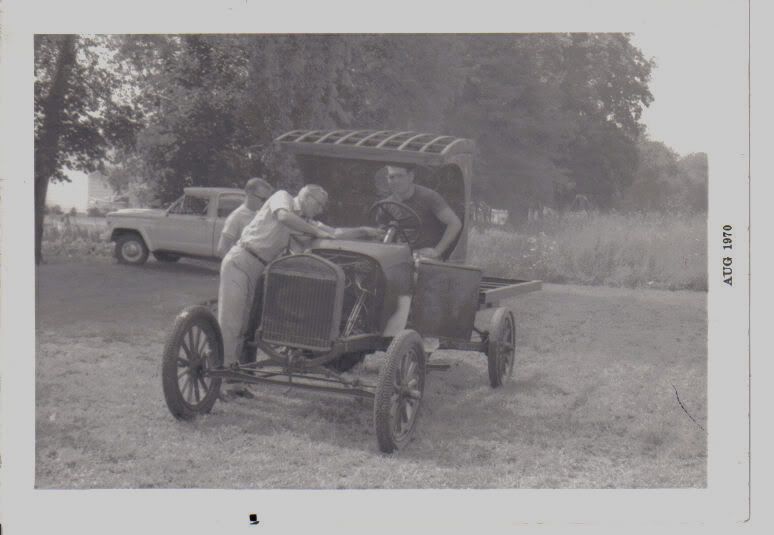
My Dad started restoring Model T Fords by the time I was 9 or 10. Not long after that he took me on a parts search to the Antique Automobile Club of America (AACA) Fall Meet in Hershey, Pa. aka "Hershey" I was hooked on old cars. Hershey is probably the Mecca of old car shows and flea markets. You can wander down the aisles and find pretty much anything for any old car built in the last 120 years, or at least find someone who can help you find that part.
I remember taking a vacation from Pennsylvania to Wyoming and back in our 1974 Jeep pickup to camp, see the sights, and pick up some rust free Model T parts from a seller out west. My Mom supported my Dad with his hobby, helping where she could and even letting him bring the freshly-painted body of his 1921 Model T touring car into the dining room through the sliding patio door, prop it up on sawhorses, and leave it set up that way for what seemed like a couple months while they reupholstered the body, seats, and installed the convertible top. All in the dining room! (Check out that knotty pine paneling by the way!!!)
My brother was big into cars when I was growing up (he was 15 years older than me) and he worked for a few years as an auto body repairman. When I turned 16, he helped me pick out my first car - a 1970 Mustang convertible, dark metallic green with a white top and green interior. It had a four-barrel 351 Cleveland engine and a Hurst 4-speed manual transmission. I loved that car. This is the only photo I have of it.
When the second gasoline crisis hit in 1978 and gas prices skyrocketed to about 75 cents a gallon, it got a lot more expensive for my fast food income, and eventually I parked the Mustang and took up driving a 1963 four-door Dodge Dart with a slant six engine and push-button automatic transmission. Beige. Ugly. But it ran great and was a fun, simple car to own. One winter I had it at my fraternity house and the alternator was going bad, so to keep it drivable I would plug in a battery charger and plug it in through a basement window. I could get two or maybe three starts a day if I was lucky, but I didn't have to buy a battery.
After I graduated college Mom and Dad gave me their black 1977 Chrysler Cordoba. (The only shot I have of that car is from my high school junior prom. Like my wild and crazy grey tux? Wish I still had that....much hair.)
No, the Cordoba didn't have fine corinthian leather, it had a gold velour interior. 400 cubic inch engine. In-dash 8 track tape player and quadraphonic sound, great for cranking up the Doors or Led Zepplin. I drove it from Pa. to Arizona where I had my first real job. It made it as far as Albuquerque before the catalytic converter crapped out. I had a new one put in and it served me well in Phoenix for a year and a half before I sold it. But I learned the hard way why no one in their right mind drives a black car in Phoenix. You needed an oven mitt to open the door in the summer time!
I didn't get another old car until I was living here in the DC area in the early 1990s. I had been looking for something cheap that would be fun to fix and drive. One Saturday I found an ad in the Post for a 1961 Mercury Comet for $600. The ad stated that it didn't run, but was in good shape and had only 5,300 original miles. I hurried over to look at it and got the full story. Grandma car, everyone was afraid to drive it after she got to old to drive, but they couldn't sell it until after she passed away. I looked over the inside and there was almost no wear on the brake and clutch pedals, so I figured the mileage claim was probably true. Heck, why would anyone lie about it to sell the car for only $600?
I got some help from my Dad when he was visiting us and we re-did the brakes, had the gas tank cleaned and sealed, rebuilt the carburetor and installed a new fuel pump and gave it new plugs, wires, and a tuneup.
After I got it back on the road, it wasn't long before I found a car I had to have, a Mercury Cougar version of that first Mustang I had sold years earlier. The 1970 Cougar XR7 convertible had the same 351C 4v engine and Hurst four-speed manual transmission. (It turned out that both cars were very rare - less than 70 of each were built with the 351c 4v and 4-speed combination in convertible form). There's nothing much more fun than driving a convertible with a manual transmission, shifting up and down with the wind in your face.
When I wanted to buy the Cougar, SWMBO said OK, but the Comet has to go. I sold the Comet but have regretted it ever since. I loved the Cougar, and it led me to buying several other Cougars and parts cars. I'll get into Cougars more in a future post.
Within a couple years I had my first experience in the driver's seat. Somehow I got away from my Mom one day, got down the steps and out to the car. Opened the door, got behind the steering wheel and yanked it out of Park. Couldn't find the darn keys but early 1960s cars didn't have a steering wheel lockout so you could move the shifter into reverse without a key. I did, and managed to coast it down hill where I took out an old aluminum chaise lounge and smashed the garage door. I think I was about 3 at that time.
I remember taking a vacation from Pennsylvania to Wyoming and back in our 1974 Jeep pickup to camp, see the sights, and pick up some rust free Model T parts from a seller out west. My Mom supported my Dad with his hobby, helping where she could and even letting him bring the freshly-painted body of his 1921 Model T touring car into the dining room through the sliding patio door, prop it up on sawhorses, and leave it set up that way for what seemed like a couple months while they reupholstered the body, seats, and installed the convertible top. All in the dining room! (Check out that knotty pine paneling by the way!!!)
When the second gasoline crisis hit in 1978 and gas prices skyrocketed to about 75 cents a gallon, it got a lot more expensive for my fast food income, and eventually I parked the Mustang and took up driving a 1963 four-door Dodge Dart with a slant six engine and push-button automatic transmission. Beige. Ugly. But it ran great and was a fun, simple car to own. One winter I had it at my fraternity house and the alternator was going bad, so to keep it drivable I would plug in a battery charger and plug it in through a basement window. I could get two or maybe three starts a day if I was lucky, but I didn't have to buy a battery.
After I graduated college Mom and Dad gave me their black 1977 Chrysler Cordoba. (The only shot I have of that car is from my high school junior prom. Like my wild and crazy grey tux? Wish I still had that....much hair.)
No, the Cordoba didn't have fine corinthian leather, it had a gold velour interior. 400 cubic inch engine. In-dash 8 track tape player and quadraphonic sound, great for cranking up the Doors or Led Zepplin. I drove it from Pa. to Arizona where I had my first real job. It made it as far as Albuquerque before the catalytic converter crapped out. I had a new one put in and it served me well in Phoenix for a year and a half before I sold it. But I learned the hard way why no one in their right mind drives a black car in Phoenix. You needed an oven mitt to open the door in the summer time!
I didn't get another old car until I was living here in the DC area in the early 1990s. I had been looking for something cheap that would be fun to fix and drive. One Saturday I found an ad in the Post for a 1961 Mercury Comet for $600. The ad stated that it didn't run, but was in good shape and had only 5,300 original miles. I hurried over to look at it and got the full story. Grandma car, everyone was afraid to drive it after she got to old to drive, but they couldn't sell it until after she passed away. I looked over the inside and there was almost no wear on the brake and clutch pedals, so I figured the mileage claim was probably true. Heck, why would anyone lie about it to sell the car for only $600?
I got some help from my Dad when he was visiting us and we re-did the brakes, had the gas tank cleaned and sealed, rebuilt the carburetor and installed a new fuel pump and gave it new plugs, wires, and a tuneup.
After I got it back on the road, it wasn't long before I found a car I had to have, a Mercury Cougar version of that first Mustang I had sold years earlier. The 1970 Cougar XR7 convertible had the same 351C 4v engine and Hurst four-speed manual transmission. (It turned out that both cars were very rare - less than 70 of each were built with the 351c 4v and 4-speed combination in convertible form). There's nothing much more fun than driving a convertible with a manual transmission, shifting up and down with the wind in your face.
When I wanted to buy the Cougar, SWMBO said OK, but the Comet has to go. I sold the Comet but have regretted it ever since. I loved the Cougar, and it led me to buying several other Cougars and parts cars. I'll get into Cougars more in a future post.
Saturday, April 24, 2010
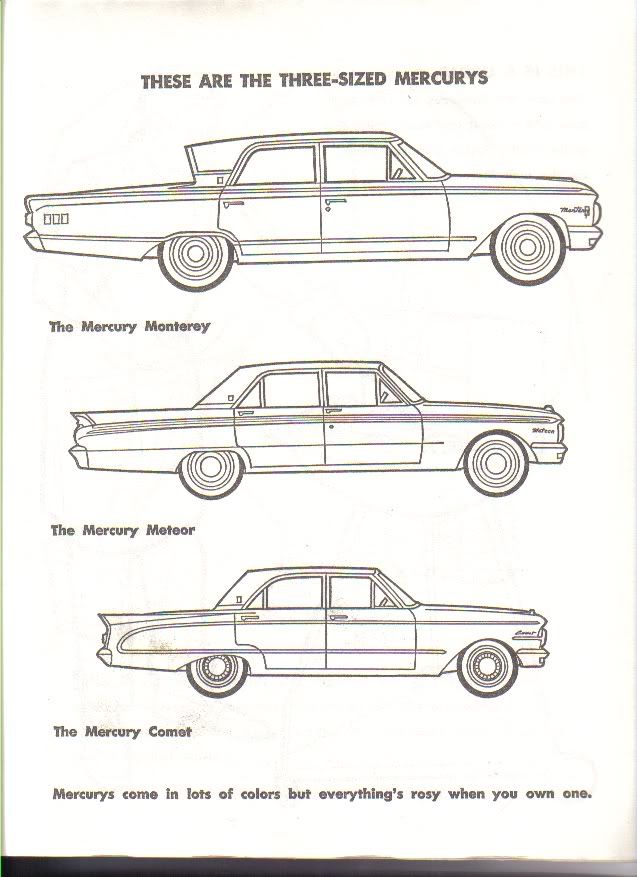
1963 Mercury Coloring Book - who knew?!
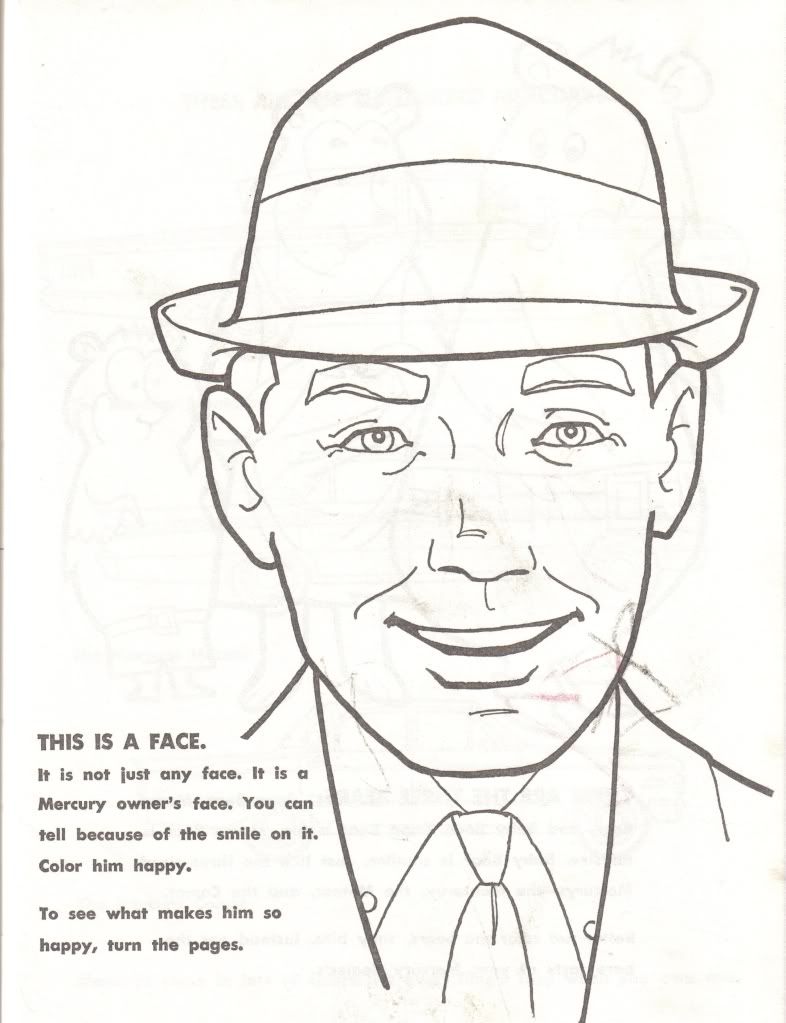
One thing I didn't need but had to have was this 1963 Mercury marketing tool - a kids coloring book with not only some nice line art of the 1963 Mercury lineup, but some great corny sales pitches to the kiddies. My graphic artist friend who is a long-time collector of Mercury-related automotive literature says he's never seen it before. I haven't taken the time to clean up these scans, wanted to get them posted quickly. Are you coloring outside the lines?
Subscribe to:
Posts (Atom)